Some cars want to go fast. This 1962 Corvette wanted to go up. This is the story of a classic that spent too long dreaming of runways, and how it rolled out of our shop as a fully customized, gloss-black head-turner.
What Happened
For years, our (entirely fictional) Corvette sat in a quiet garage next to a stack of aviation magazines. Every evening it listened to its owner talk about airplanes, wind tunnels, and lift. Somewhere along the way, the car decided it was not a sports car at all. It was a jet that had simply never been given the chance.
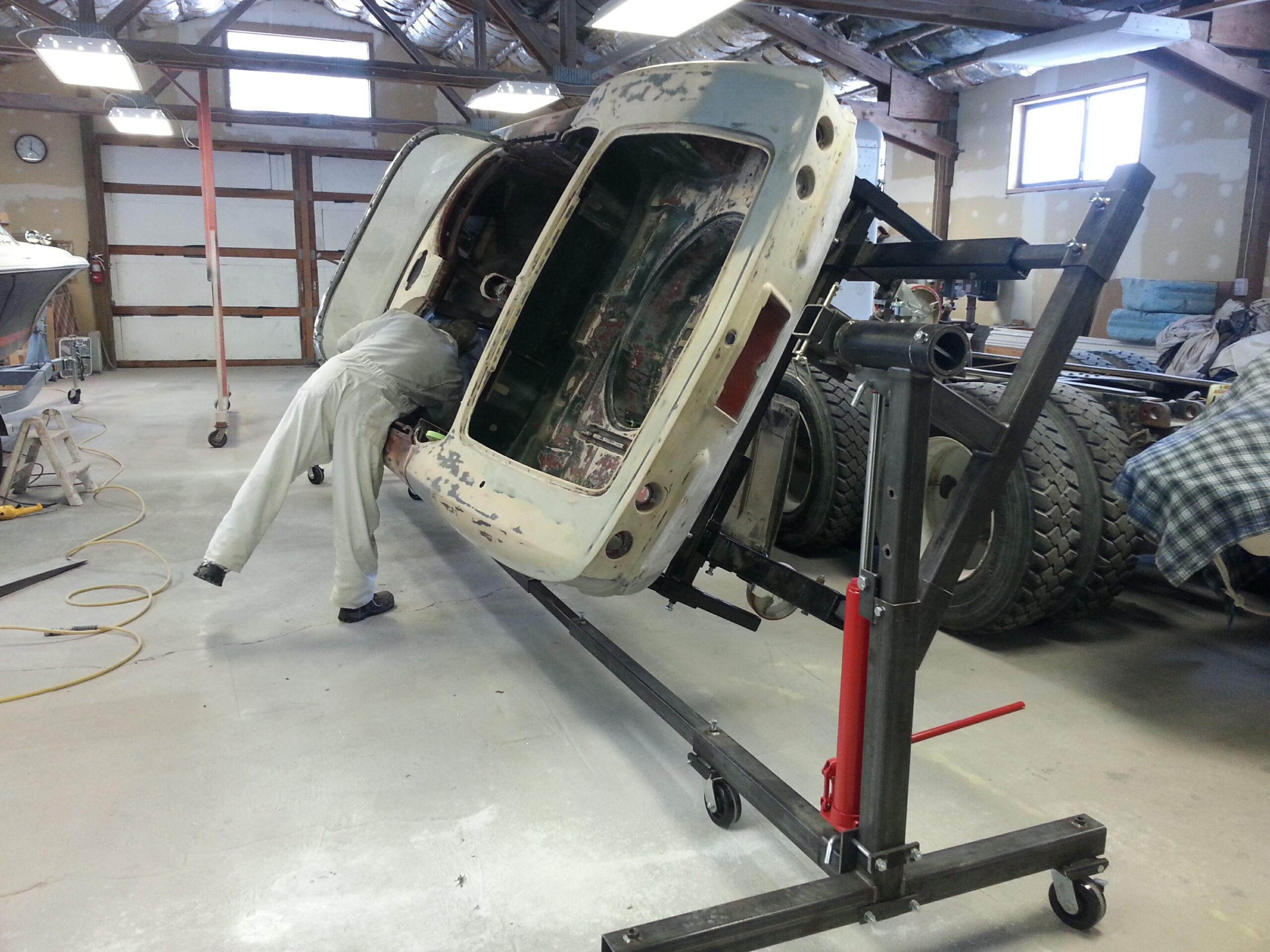
So it started training. It shed its paint to save weight. It practiced looking aerodynamic. It stared at the sky through the garage window. By the time it reached us, it was faded, flaking, missing more than a few pieces, and absolutely convinced it was ready for takeoff. The garage door, to its credit, stayed firmly closed.
The Challenge
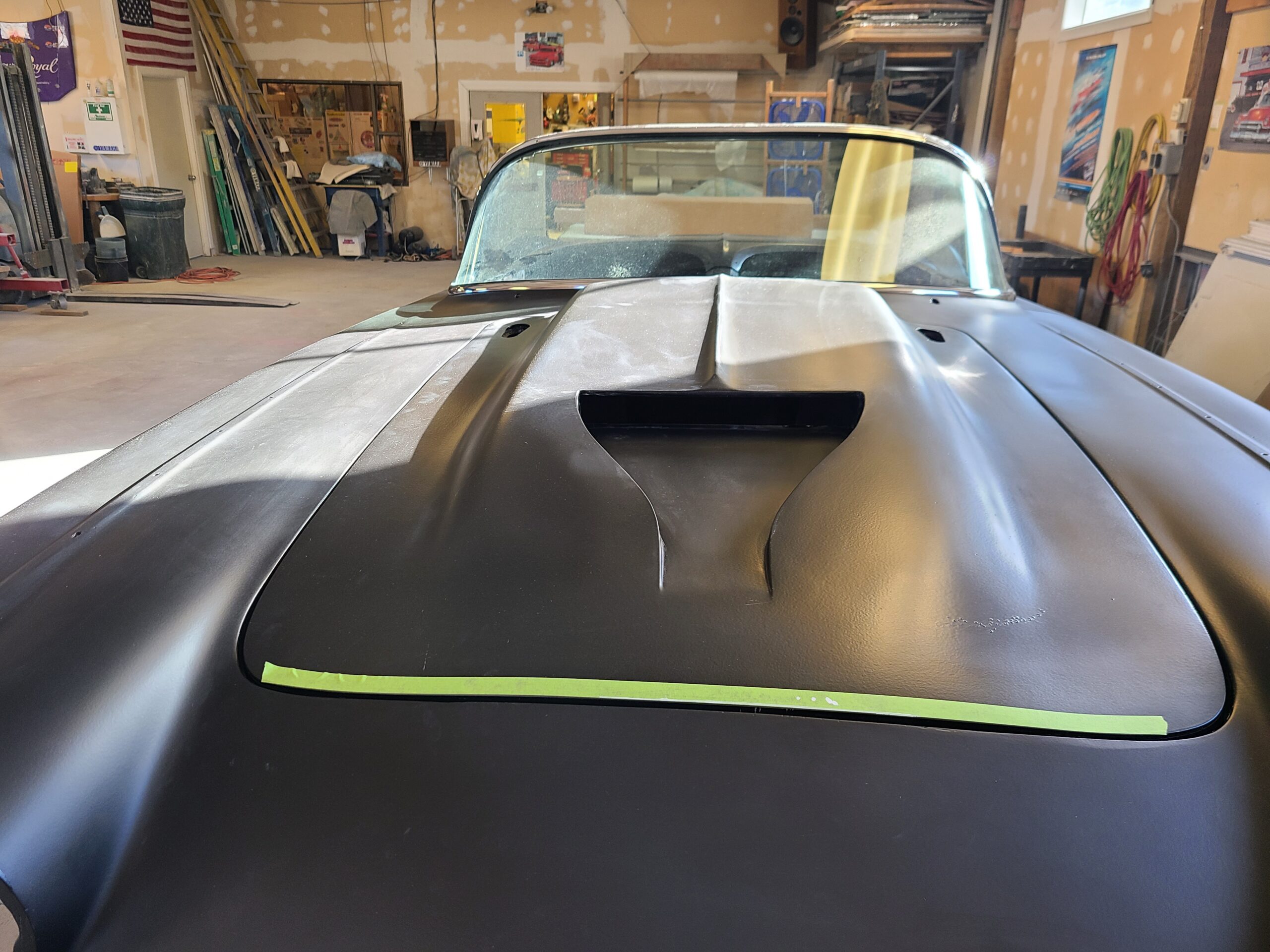
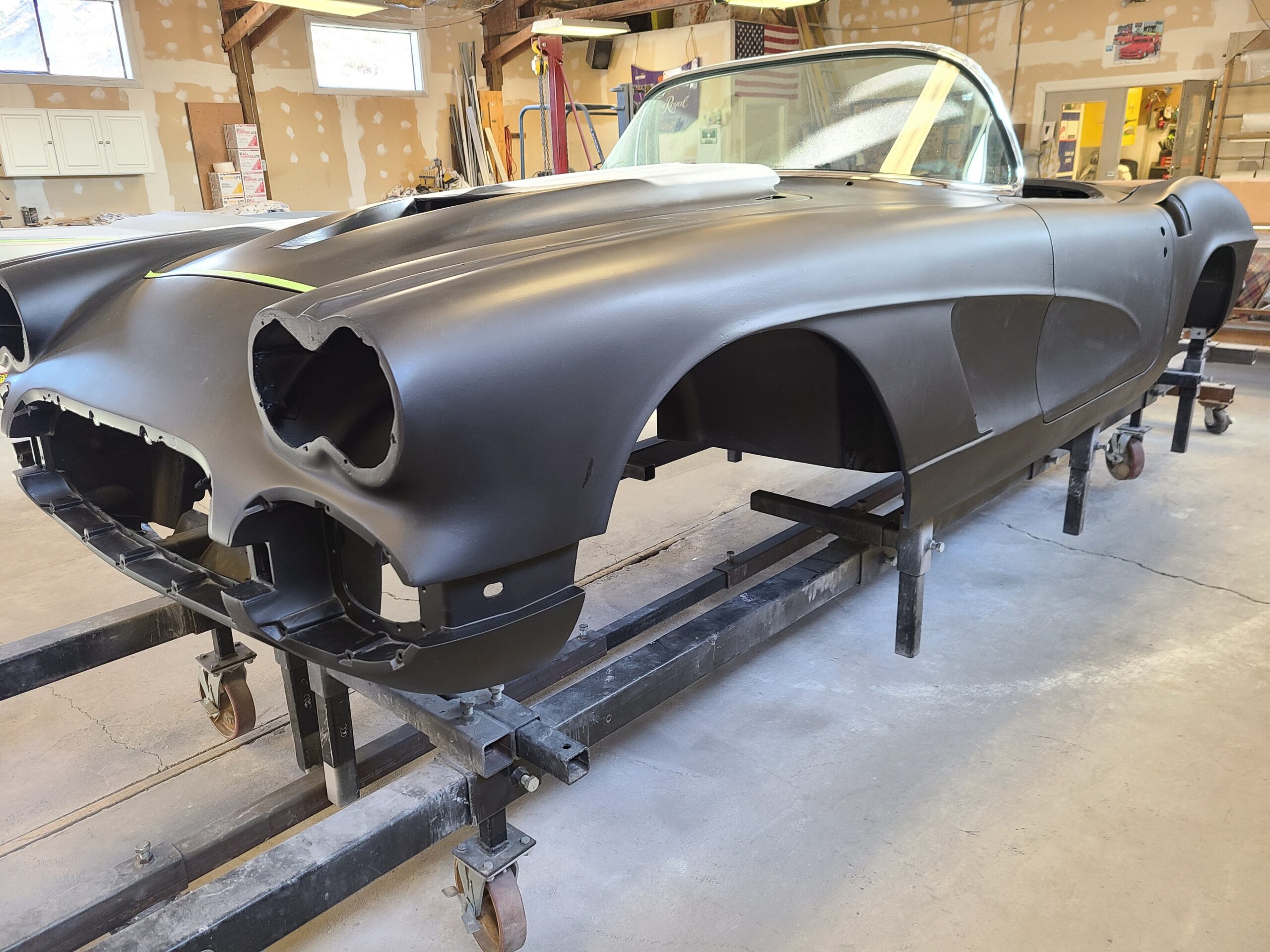
A full custom build on a 1962 Corvette is not a quick touch-up. The rear needed room for bigger wheels, which meant the original spare tire compartment had to go and new tubs had to be built and glassed into the body. The owner wanted a hood that honored a career in the aeronautics industry, and the front clip needed to be customized for the headlights and trim.
Then came the part that separates a nice car from a show car: the doors and gaps. Every seam had to be built up with fiberglass, then trimmed back, then built up again until the gaps were perfect all the way around. Finally, the entire car needed gelcoat so it was ready for paint. No shortcuts, no runway.
The Fix
Step 1: Remove the spare tire compartment. The original spare tire compartment was cut out to clear space in the rear. The car took this personally, but it was for the greater good.
Step 2: Build the rear wheel tubs. New tubs for the rear wheels were built and glassed to the car, giving the rear wheels the room they need.
Step 3: Customize the hood. The hood was reshaped to honor the owner’s career in the aeronautics industry. The Corvette finally got its jet-age look, and it has not stopped bragging since.
Step 4: Customize the front clip. The front clip was customized for the headlights and trim so the face of the car looks sharp and purposeful.
Step 5: Build up the doors and gaps. Fiberglass was added to the doors and around the gaps to reshape the edges and set up clean, even lines.
Step 6: Chase perfect gaps. Glass was added and removed, then added and removed again, until the gaps were perfect throughout the car. Patience is the secret ingredient here.
Step 7: Gelcoat for paint. The entire car was gelcoated so it was smooth, sealed, and ready for paint.
Before and After
Along the Way
The Result
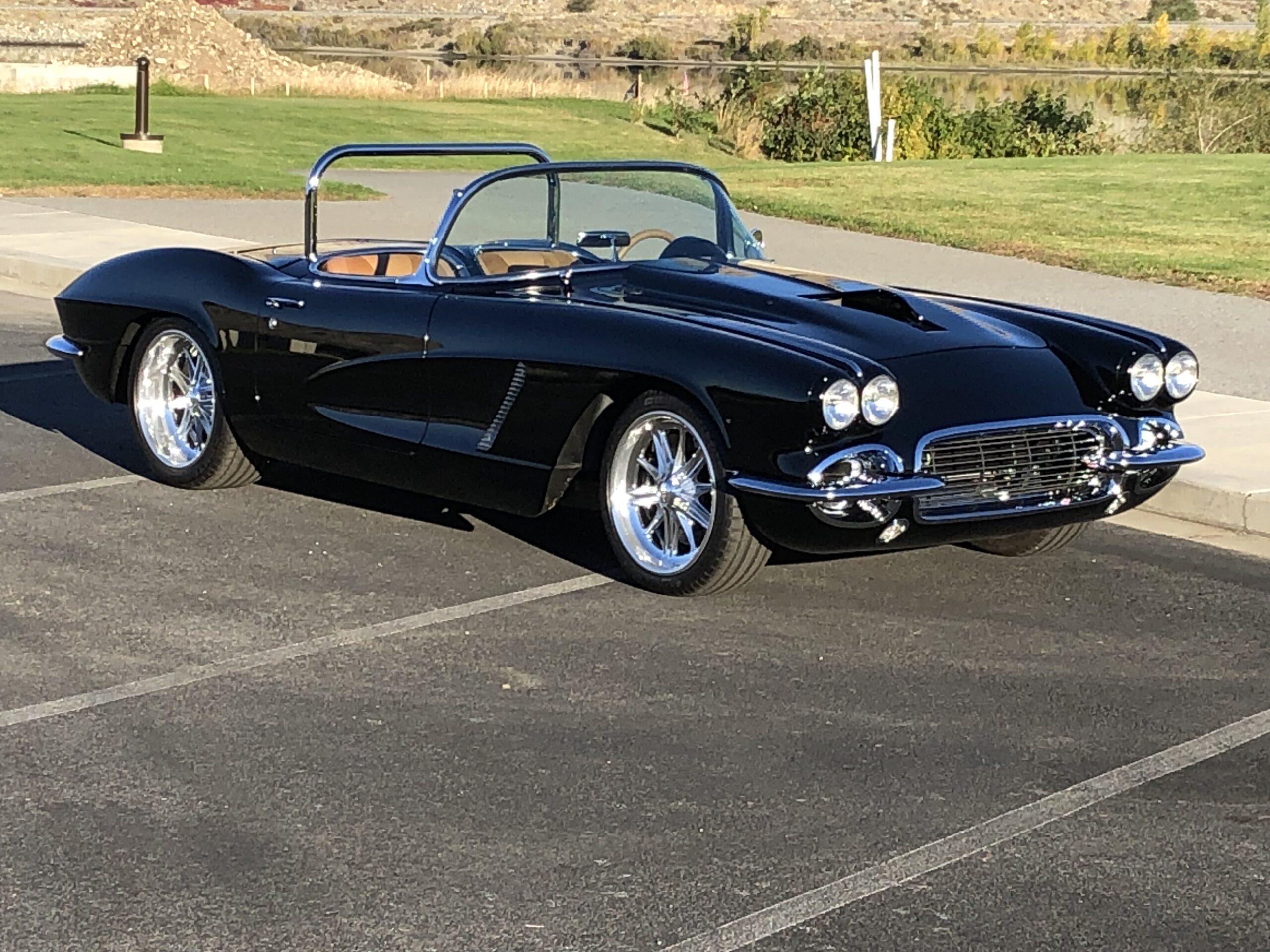
The finished Corvette came out gloss black and impossibly smooth, with a hood that tips its hat to the aeronautics industry and gaps so even you could set a ruler by them. It still cannot fly. It has made its peace with that, mostly because it now gets stared at more than any airplane in the sky.
From the custom tubs in the back to the reworked front clip up front, every panel lines up exactly the way it should, and that is exactly the point.
I asked for a car that looked like it belonged on a flight line. Now I have to explain to people at every stop that no, it does not need a pilot’s license.
Sample customer comment (fictional, written for this design preview)
By the Numbers (Example Figures)
Spare tire compartments evicted: 1 (sample)
Rear wheel tubs built: 2 (sample)
Times the door gaps were measured: Lost count (sample)
Successful takeoffs: 0 (sample)
These figures are sample numbers for layout purposes only.
Dreaming of a custom build, or just a classic with big ambitions? Call Fogle’s Fiberglass at 812-615-9046 or email foglesfiberglass@gmail.com and tell us what you have in mind. We promise not to laugh (much).
Sample story for design preview only.